The archive
The story files, by category
Every story on this site traces to court records, regulator files, federal data, or the named press coverage listed in its source ledger. Eight files are open, and more land each week.
The archive
Every story on this site traces to court records, regulator files, federal data, or the named press coverage listed in its source ledger. Eight files are open, and more land each week.
Documented policyholders betrayed by a clause, a word, or a technicality. Sourced from court opinions and regulator records.
ProPublica clocked the review at 1.2 seconds a claim. Cigna says the process involves no algorithm at all. A federal judge read the plan language and let part of the case go forward.
A 21-word sentence in the standard homeowners policy decided what 65,380 slabbed households got paid. It took eleven years and a Supreme Court case to close the file.
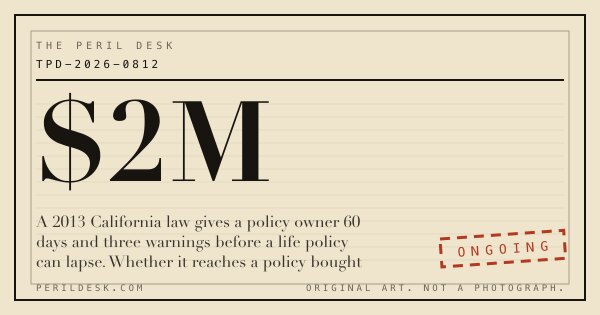
A 2013 California law gives a policy owner 60 days and three warnings before a life policy can lapse. Whether it reaches a policy bought in Illinois and paid from California was set for an answer on April 16, 2025. The case settled first.
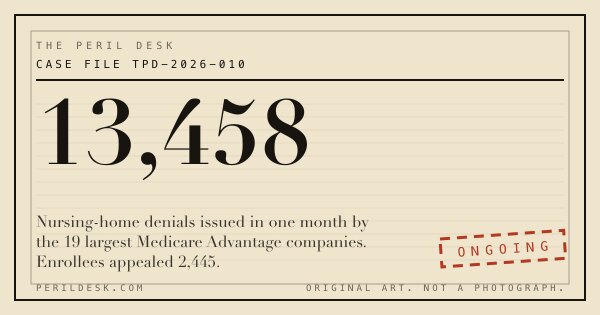
Federal auditors pulled one month of Medicare Advantage prior authorization data from the 19 largest plan companies and found 13,458 skilled nursing denials. Most were never appealed, and most of the appeals won.
The live national story of insurer retreat: pauses, non-renewals, last-resort plans, and rate hikes with traceable culprits.

The May 2023 pause never ended, and the fallback plan grew 44 percent in a year. A 29.1 percent FAIR Plan rate increase takes effect October 15.

After the January 2025 Los Angeles fires the California FAIR Plan assessed its member insurers $1 billion, and half of that is recoverable from ordinary policyholders under a line item called the Temporary Supplemental Fee.
Adjudicated insurance true crime. The retell always ends the same way: and they caught him.
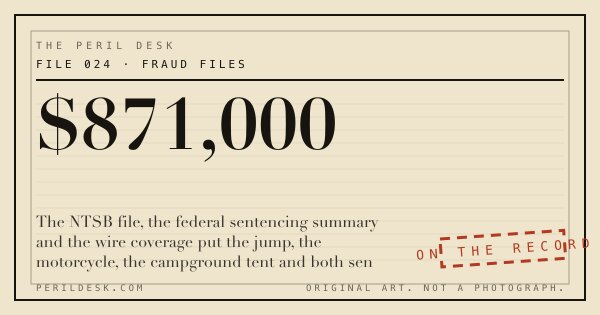
The NTSB file, the federal sentencing summary and the wire coverage put the jump, the motorcycle, the campground tent and both sentences on the record.
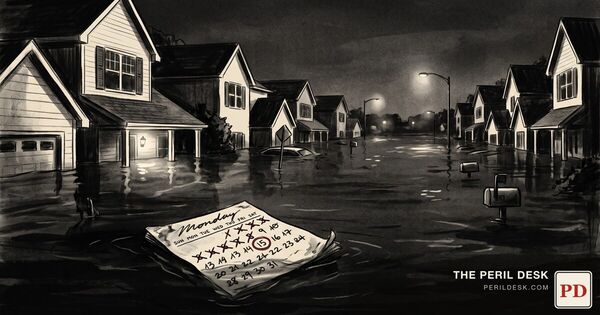
John Darwin vanished from the North Sea in a canoe in 2002. For most of the five years he was dead, he was on the other side of his widow’s bedroom wall.
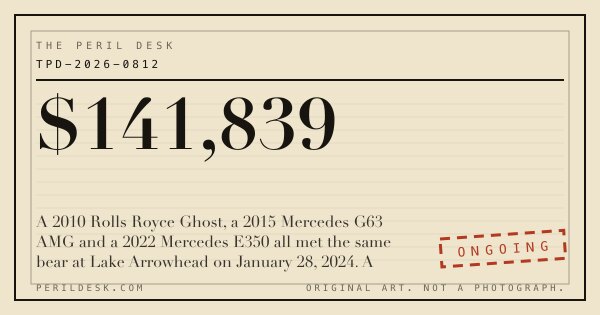
A 2010 Rolls Royce Ghost, a 2015 Mercedes G63 AMG and a 2022 Mercedes E350 all met the same bear at Lake Arrowhead on January 28, 2024. A state wildlife biologist watched the videos and said it was clearly a human in a bear suit.
Documented people standing in a coverage gap when disaster arrived. The story’s moral is the paperwork itself.
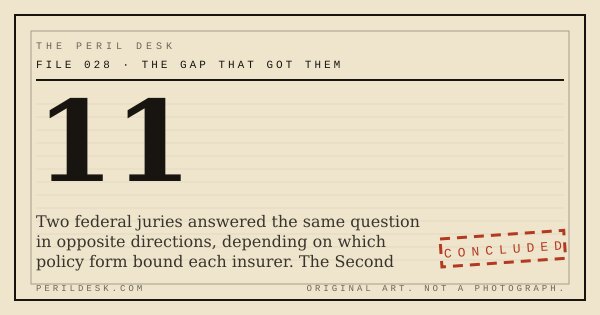
Two federal juries answered the same question in opposite directions, depending on which policy form bound each insurer. The Second Circuit upheld both in October 2006.
The documents are three 2019 Connecticut Supreme Court opinions and a state captive fund’s own pages. An estimated 35,000 homes sit in the zone.
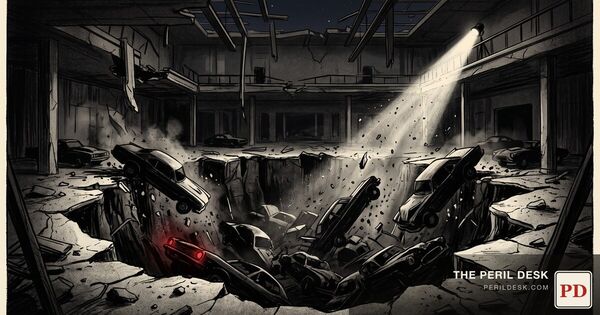
Policyholders averaged $118,000 per claim. The uninsured averaged $4,400 in grants. Four weeks before the storm had a name, the 30-day waiting period had already drawn that line.
Protective Life ended the policy 31 days after the due date. Nine days before that date, a new California law had given him 60 days and required 30 days of written warning. It took eight years and the state Supreme Court to decide the law counted.
Verified absurd claims and impossible policies, always resolved to the actual clause that paid.
The museum floor dropped into a hidden cave with eight cars on it. By December, 251,258 people had bought tickets to look at the hole.

Westar 6 and Palapa B2 stalled in useless orbits in February 1984. The underwriters paid the claims, took title to the hardware, and spent $10.5 million sending a space shuttle to collect their own property.
History’s catastrophes and the insurance rules they created. Every strange line in a modern policy was written by a specific disaster.
Disasters That Wrote the Rulebook
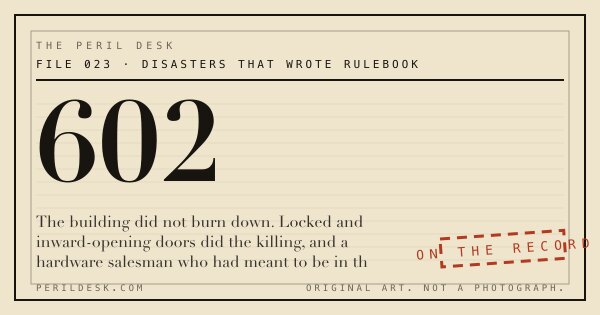
The building did not burn down. Locked and inward-opening doors did the killing, and a hardware salesman who had meant to be in the audience designed the bar that opens them.

Disasters That Wrote the Rulebook
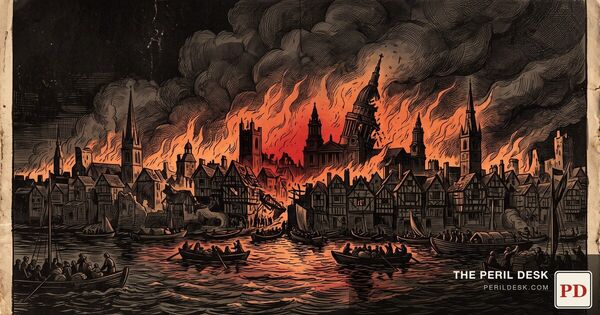
13,200 houses, 87 churches, and not one policy to claim on. The strange lines in your homeowner policy were written in that ash.
Disasters That Wrote the Rulebook
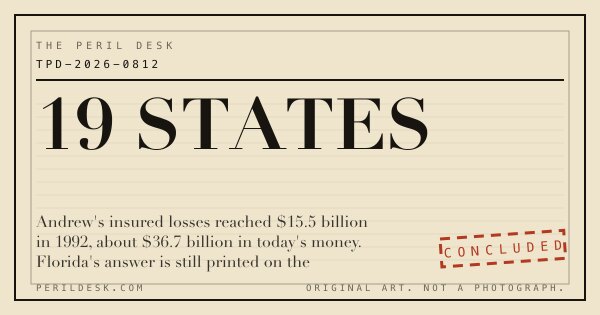
Andrew’s insured losses reached $15.5 billion in 1992, about $36.7 billion in today’s money. Florida’s answer is still printed on the declarations page in 18-point boldface.
Government and insurer datasets turned into rankings, odds, and records. Find your state, check the denominator.
State Farm’s newest study puts national odds at 1 in 139, with a 24-fold spread between West Virginia and Nevada. Find your state in the table.
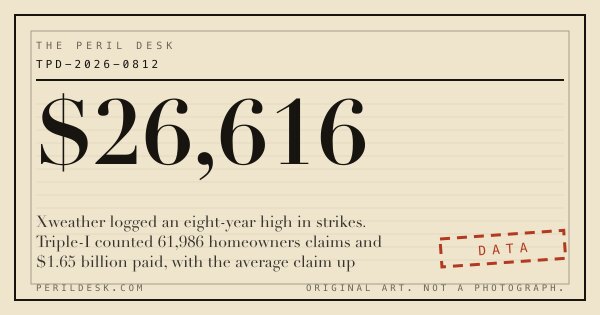
Xweather logged an eight-year high in strikes. Triple-I counted 61,986 homeowners claims and $1.65 billion paid, with the average claim up 42.8 percent in a single year and 146.9 percent since 2017.
Pets and wildlife colliding with the insurance system, one docket at a time.
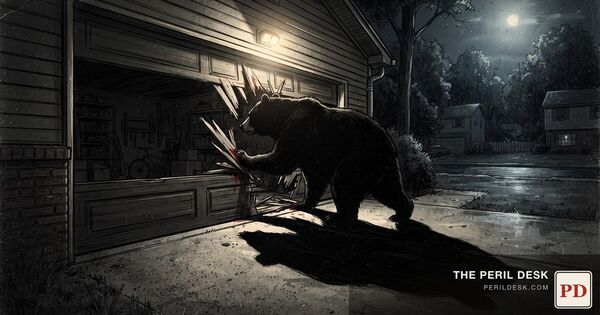
DNA tied at least 21 South Lake Tahoe break-ins to bear 64F. The splintered doors ran through the same homeowners policies that handle fire and hail.
Medical bills, the machinery that decides who pays them, and the paperwork nobody is shown.
The No Surprises Act handed the fight to a private arbitrator the patient never meets. On July 22 their names became public, and the provider win rates run from 51 to 96 percent.

The No Surprises Act banned balance billing for emergency rooms and for air ambulances. Congress left ground ambulances out, and four line items on one San Francisco hospital transfer show what that exclusion is worth. KFF Health News published the itemized bill on February 28, 2025.
The models, scores and algorithms that price a policy before a human ever reads the file.
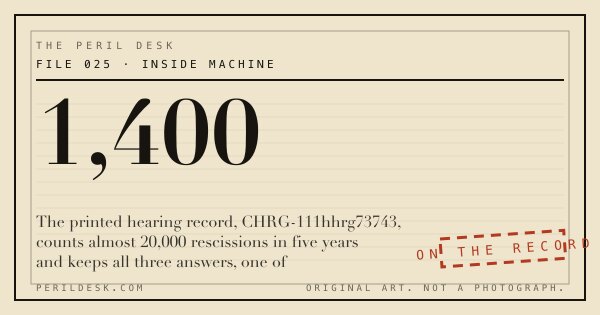
The printed hearing record, CHRG-111hhrg73743, counts almost 20,000 rescissions in five years and keeps all three answers, one of them “I would not commit to that.”
HB25-1182 made the wildfire model behind a premium a disclosable number, but the regulation telling insurers when to actually send it does not bind until October 1.
The image that decides whether a homeowners policy survives is taken from the air, and Colorado’s own bulletin on the practice says a bulletin binds nobody.
Insurance written on human lives, and the paper the arrangements left behind.
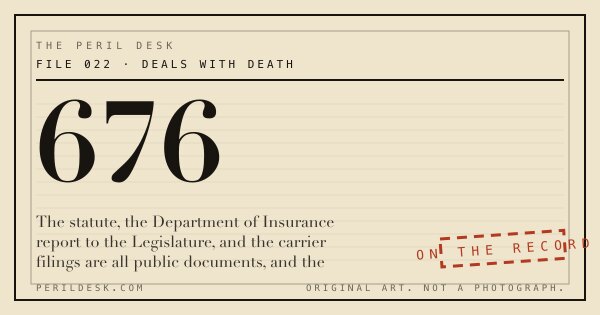
The statute, the Department of Insurance report to the Legislature, and the carrier filings are all public documents, and the registry lists people by name.
One event, reconstructed minute by minute from the official record.
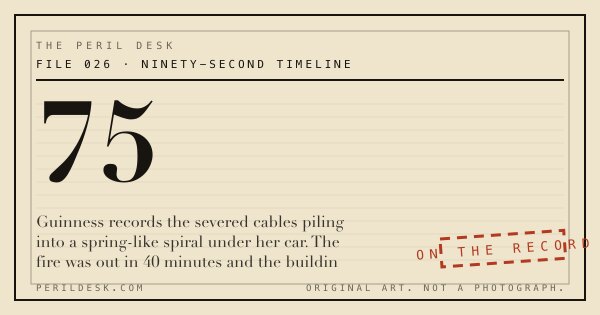
Guinness records the severed cables piling into a spring-like spiral under her car. The fire was out in 40 minutes and the building opened Monday.
These pages carry flat-fee partner links, disclosed on the page. Every partner pays the same flat fee, so no link earns more than any other.
Eight of the largest US home insurers, ordered on the 2026 claims study from J.D. Power, with AM Best financial strength and NAIC market data alongside.
Eight renters carriers, scored on the 2025 J.D. Power study, with the study average marked on every row.
Eight life carriers, with 2025 scores from J.D. Power, AM Best ratings, and NAIC complaint indexes, all sourced on the page.